
Dust Prevention Tips for Carpeted Rooms
Keeping dust out of carpeted rooms isn’t just about appearances; it’s about how your home feels when you breathe in.
Carpet fibres can hold on to fine particles that drift in from outside, circulate through vents, and settle after the day has quietened.
With a few steady habits and the right choices, you can keep your rooms fresher, calmer, and far easier to maintain.
Choose Carpets That Do Not Invite Dust
If you’re picking up a new carpet, the fibres and pile height matter more than most people realise.
Low-pile or tightly woven styles give dust fewer places to hide, which means it’s easier to lift away during routine cleaning.
Plush, high-pile carpets can feel luxurious underfoot, yet they tend to cradle debris deep in the tufts, especially in busy living areas where movement keeps particles shifting.
Synthetic fibres, such as nylon and polyester, are practical choices because they resist moisture and don’t cling to dust as readily as some natural blends. Wool can work beautifully too, though it benefits from consistent care and a steady indoor humidity level.
Colour plays a quiet role. Mid to deeper tones can disguise light surface dust between cleans, while very pale shades can make every speck look dramatic in certain afternoon light.
Once the carpet is down, a good underlay helps in turn. It reduces wear, keeps the fibres springy, and stops grit from grinding into the backing when shoes or chair legs pass over it.
Control What Comes In Through Your Door
Dust rarely arrives as a single problem. It comes in on soles, on pram wheels, on the hem of a coat that brushed a pavement edge, and on the breeze that follows an opened door.
A simple entry routine can cut the amount that reaches your carpets by a surprising margin, especially in autumn when crisp leaves crumble into fine fragments outside.
A no-shoes approach works best when it feels easy rather than strict. A small bench or a clear spot to sit, plus a dedicated place for footwear, encourages compliance without turning your hallway into a lecture.
A sturdy doormat outdoors catches the first layer of grit, while a washable runner just inside the threshold collects what remains.
If you have guests, offering clean house slippers keeps things welcoming and avoids awkwardness.
With this in mind, pay attention to the routes you walk most. If the path from the front door to the sitting room is a straight line, a slim protective runner can spare the carpet from ground-in dirt.
Keep Air Moving Cleanly Around The Room
Even in a tidy home, dust can circulate and resettle because of airflow. Warm air rising from radiators, a fan running during the summer, or the gentle pull of an extractor elsewhere in the house can all shift particles into carpeted rooms.
You don’t need to seal the place up, but you do need clean systems that don’t redistribute what you’re trying to remove.
Start with filters. If your heating or cooling system uses replaceable filters, checking them monthly is a sensible rhythm. A clogged filter lets fine dust pass through more easily, and it can strain the system, which is frustrating and costly.
Air vents benefit from occasional attention too. A careful vacuum over grilles, followed by a wipe with a slightly damp cloth, prevents dust from billowing out each time the system cycles.
An air purifier with a true HEPA filter can make a noticeable difference in bedrooms and sitting rooms, where you spend long stretches of time. Place it where air can circulate freely, not tucked behind a chair.
Meanwhile, keep humidity in a comfortable range. Air that’s too dry lets dust float longer, while damp air can encourage mustiness.
Clean In Ways That Lift Dust Rather Than Spread It
The method matters as much as the frequency.
If you vacuum quickly with the wrong equipment, you can stir up dust and send it into the air, only for it to settle again by evening.
A vacuum with a sealed system and a HEPA filter helps trap fine particles, which is particularly valuable if you’re sensitive to allergens.
Move furniture a little, even if it’s only by a few centimetres—so you can reach the edges where dust collects. Skirting boards and carpet borders are quiet trouble spots, because airflow slows there and debris drifts down.
A vacuum crevice tool along the perimeter, followed by a gentle pass with a soft brush head, keeps build-up from turning into a stubborn line.
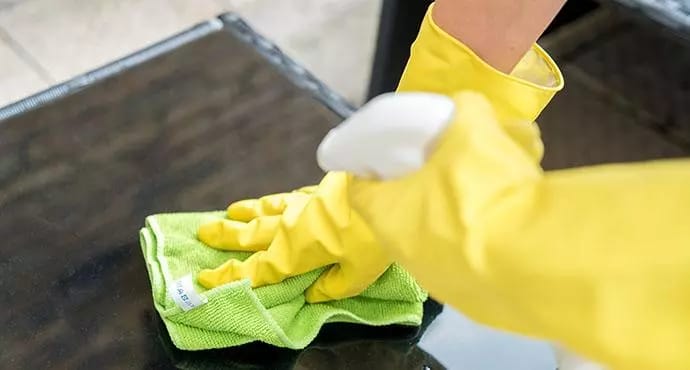
Microfibre cloths are useful for hard surfaces in carpeted rooms since they capture dust instead of flicking it into the air. Lightly dampen the cloth rather than using a dry one, and rinse it often so you’re not dragging particles from shelf to shelf.
If you use sprays, choose mild products and apply them to the cloth, not into the air. In the same spirit, let the room settle for a short while after cleaning. Dust that has been disturbed needs time to drop before you do a final tidy pass.
Deep cleaning has its place too. Steam cleaning or hot water extraction can refresh weaves and remove embedded grime, and rug cleaning can be scheduled at the same time if you want everything to feel consistently fresh.
Reduce Dust Traps Without Losing Comfort
Dust loves stillness and clutter. That doesn’t mean your room must be bare, but it helps to be picky about what’s out.
Small ornaments, stacks of magazines, and fabric throws draped over chairs all provide surfaces where dust can settle, especially in rooms with soft light and little airflow.
Storage that closes is your ally. A lidded basket, a cabinet, or a simple box tucked on a shelf keeps items contained and easier to maintain. Curtains deserve attention as well. Heavy fabrics can trap dust, and they sit close to carpets where particles gather.
If you can, choose curtains that can be washed at home, and give them a gentle shake outdoors on a dry day before laundering.
Upholstery and cushions are part of the same ecosystem. Vacuum sofas and armchairs with an attachment so dust doesn’t drift back onto the floor. Rotate cushions, and wash covers when possible.
Bring In Natural Helpers And Protective Layers
Some solutions work quietly in the background. Carpet protectors in high-traffic areas can shield fibres from wear and grime, particularly near doorways and under dining tables.
Choose options that suit the space. Clear protectors can be practical where spills are likely, while fabric runners can blend more naturally into a sitting room.
Plants can help too, as long as they’re chosen and cared for sensibly. A spider plant or a peace lily can support air quality by catching particles on leaves, which you can wipe clean as part of your routine.
Place plants where they will thrive in soft sunlight and avoid overwatering, since damp soil can encourage mould and an unpleasant smell close to the carpet.
Finally, pay attention to what’s happening outside. On windy days, keep windows open only briefly and at times when traffic is lighter. If you live near a busy road, airing the room early in the morning can bring in cooler, cleaner air before the day builds.
Conclusion
In the end, dust prevention isn’t a single grand clean. It’s a collection of small decisions that keep your carpets from becoming a storehouse for what the air carries.
If you choose the right materials, manage airflow, and clean with care, your rooms will feel fresher, even on long winter evenings when windows stay shut.
Keep at it, and you’ll notice the difference in comfort, in air, and in how easily your home settles back into calm.